
Imagine sending a message, controlling a robotic arm, or interacting with artificial intelligence — without typing, speaking, or touching a screen. Just by thinking.
This is no longer science fiction.
With the convergence of Brain–Machine Interfaces (BMI) and Machine Learning (ML), humanity is entering a new technological era where the human brain itself becomes a communication channel. This fusion of neuroscience and AI is set to redefine healthcare, computing, communication, and even what it means to be human.
What Is a Brain–Machine Interface?
A Brain–Machine Interface (BMI) is a system that creates a direct communication pathway between the brain and an external device.
In simple terms, a BMI:
- Reads electrical signals from the brain
- Interprets those signals
- Converts them into meaningful actions
BMIs can be:
- Non-invasive – using EEG headsets placed on the scalp
- Invasive – using implants placed directly in the brain
However, raw brain signals are extremely complex, noisy, and different for every person. This is where Machine Learning becomes the backbone of BMI technology
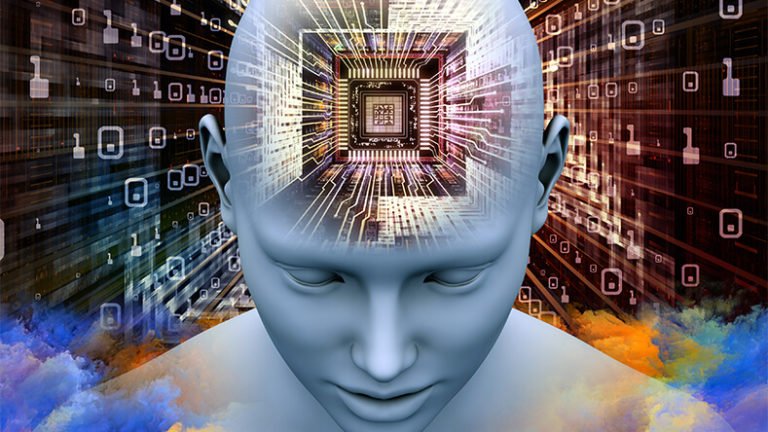
The human brain generates millions of signals every second. Without ML, it would be nearly impossible to interpret them accurately.
Machine Learning enables BMIs to:
- Filter noise from raw brain signals
- Detect meaningful neural patterns
- Learn how an individual brain works
- Improve accuracy over time through experience
Instead of hard-coded rules, ML models adapt to the user, making BMIs faster, smarter, and more reliable with continuous use.
How Brain–Machine Interfaces Work (Step-by-Step)
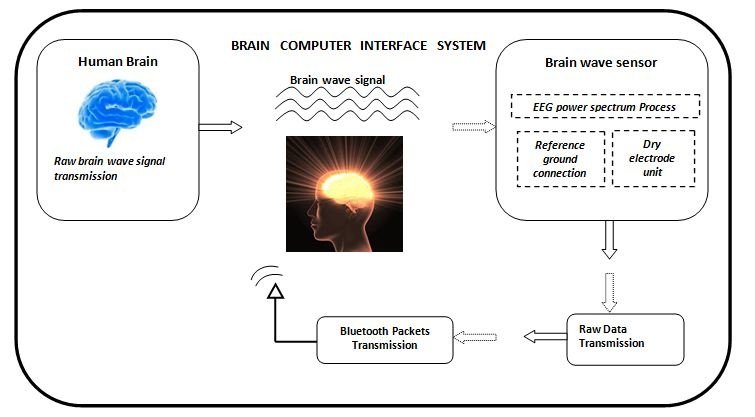
- The brain generates neural activity
- Sensors capture electrical signals
- ML algorithms analyze and classify patterns
- Signals are translated into commands
- Machines perform the intended action
The more data the system receives, the better it understands the user’s intentions — creating a learning loop between the brain and the machine.
High-Tech Applications of BMI + Machine Learning
1. Healthcare & Neuro-Rehabilitation
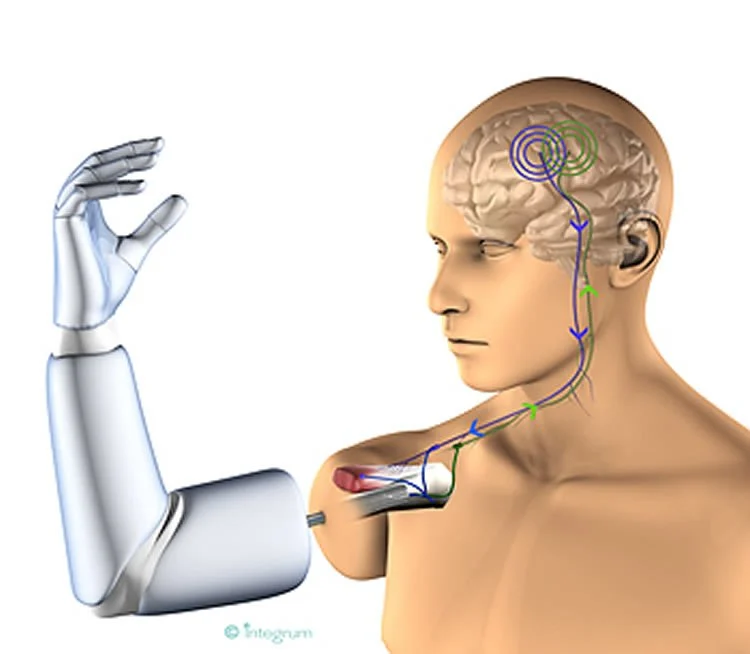
One of the most life-changing uses of BMI + ML is in medicine.
- Paralyzed patients controlling robotic limbs
- Stroke survivors regaining lost motor functions
- Speech restoration for patients unable to talk
Machine Learning personalizes neural decoding for each patient, making recovery faster and more natural.
2. Thought-Controlled Devices
In the near future, ML-powered BMIs could enable:
- Wheelchairs controlled by thoughts
- Smart homes responding to neural commands
- Hands-free computing for accessibility
This has massive implications for people with disabilities and for next-generation human–computer interaction.
3. Gaming, AR & Virtual Reality
Gaming and immersive experiences could be completely transformed:
- Games controlled directly by thoughts
- Emotion-responsive virtual environments
- Full neural immersion without controllers
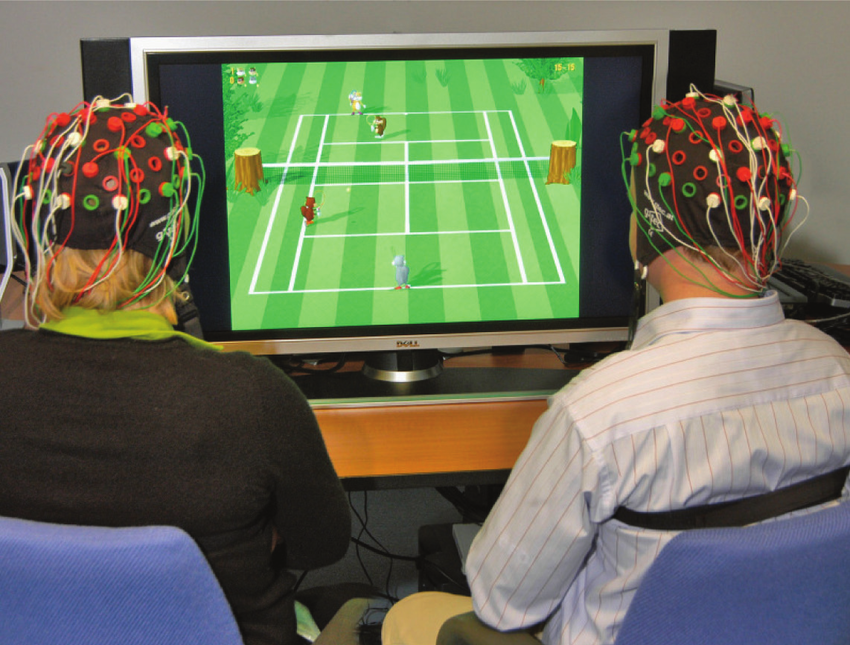
Machine Learning maps emotional and intention-based signals to virtual actions, making experiences deeply personalized.
4. Direct Human–AI Communication
Perhaps the most revolutionary idea is thought-based communication with AI:
- No language barriers
- Instant idea transfer
- AI responding to intent, not commands
This could become the foundation of future Artificial General Intelligence (AGI) interaction.
The Future Outlook (2030–2040)
In the coming decades:
- Keyboards and touchscreens may become obsolete
- Prosthetics will feel like natural body parts
- Brain-to-brain communication may become possible
- Human intelligence will be augmented, not replaced
BMI powered by Machine Learning represents the deepest integration of biology and technology ever attempted.
Final Thoughts
Brain–Machine Interfaces combined with Machine Learning are not about turning humans into machines — they are about unlocking human potential.
This technology has the power to heal, empower, and redefine human capability. How responsibly we develop it will determine whether it becomes humanity’s greatest breakthrough or its greatest challenge.